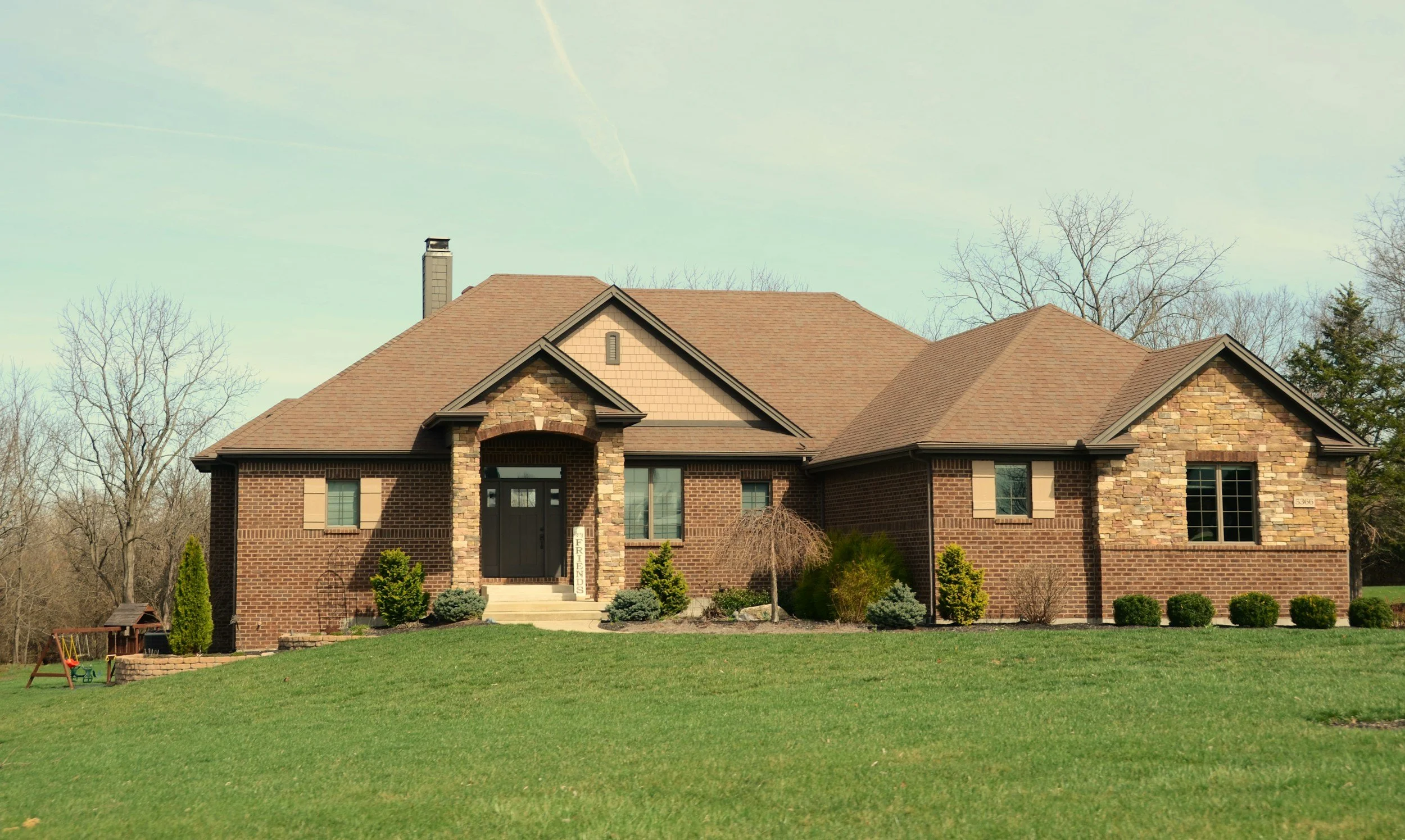
What skills do you need to project manage a self-build?
Many of our clients love the idea of project managing their self-build or large-scale renovation themselves. This is definitely an option, but you will need many skills to manage it successfully. Not to mention the time involved.
But if you are up for the challenge, we promise you it will be worth it!
Plus, if you are considering taking on the project manager role, then Mayflower Mortgage will be here to support you. All of our clients get a dedicated expert assigned to their project, who will be there to help them throughout their build. As well as a complimentary fully costed schedule of works and a personalised cash flow forecast to support your planning.
So if this is something you’re considering, these are 18 (!) tasks you’ll be responsible for, and so the skills you’ll need to be a project manager for your self-build.
Defining roles & responsibilities
Every project needs a clear map of who is responsible for what. Without that map, even good people will step on each other’s toes or leave gaps because they assume someone else is handling it. Start by listing the core roles you’ll have on your build;client, architect or designer, structural engineer, principal contractor or main builder, trade leads (groundworks, frame, roofing, plumbing, electrics, plastering), and building control contact. Next to each name, write the three most important outcomes they own. Keep it simple: “deliver watertight shell to drawings,” “coordinate and commission MVHR,” “sign off foundations and drainage with building control,” and so on.
Responsibility is not the same as blame. It’s a promise about outcomes. If foundations aren’t ready on the agreed date, your groundworks lead owns the problem, but they also need you to have released the order, the designer to have issued up-to-date drawings, and the supplier to have delivered. Clarify interfaces where roles meet (for example, who sets out levels, who owns the airtightness layer, who patches membranes after services penetrations). The more precise you are at interfaces, the fewer disputes you’ll have later.
Authority and the ability to delegate
Authority is your lever for speed without chaos. Decide up front who can commit time and money when you are not there. A simple tiered approach works well. Tier A: you (or your appointed project lead) approve anything that changes programme milestones, structural elements, or total cost beyond a small threshold. Tier B: The main contractor or site manager can approve routine adjustments within a daily “spend limit” (e.g., a few hundred pounds for extra fixings, protective materials, or an additional skip). Tier C: Trade leads can make no-cost decisions to keep work moving (e.g., swapping screw sizes or relocating a stud by 10 mm to avoid a clash), provided they document the change.
Delegation is a written act. Say it once, write it down, and share it. “From today, Sam (builder) can authorise purchases up to £500 to protect the schedule; anything above that needs my OK by text or email.” Delegation is also reversible: if a trade consistently oversteps or makes poor choices, reduce their authority and put decisions back through you until confidence is restored. This approach protects the programme without leaving you exposed to surprise costs.
Setting expectations
Expectation-setting is the cheapest risk control you have. Begin each package or trade with a five-minute induction: explain how to access the site, hours, where to park, where to unload, who to contact for decisions, what the next milestone is, what “tidy at end of day” means, and how to flag problems. Confirm how you want news delivered: call for urgent issues, WhatsApp for photos, and a weekly summary in writing.
Be specific about quality. “Fair” and “good” are vague; “paint to manufacturer’s system: prime + two full coats, uniform sheen, no visible roller lines from 1.5 m in normal light” is clear. For services, quality means evidence: commissioning sheets, test certificates, serial numbers, and photos of hidden layers. When you define expectations like this, most people will meet them without pushback, because it is measurably fair.
Support
People do their best work when the basics are in place. Support means removing friction so trades can focus on their craft: clear access, a dry area for drawings, power on time, a clean storage zone, and the right protection for finished work. Support also looks like timely decisions. If a trade has to stop because a tap position or tile trim hasn’t been chosen, that’s an avoidable delay. Keep a short “decisions due” list and review it twice a week.
Support includes respect. Thank people when they flag a problem early. A calm “good catch;let’s fix it before plaster” does more for morale than any poster about teamwork. When you see a trade tidy up without being asked, call it out. Culture compounds fast on a site; a little fairness travels far.
Motivation
Motivation on a build is practical, not fluffy. People are motivated by steady work, clear wins, and being paid on time. Break the job into visible milestones so each trade can see progress: “ground beams complete,” “roof trusses set,” “first fix signed off,” “rooms pre-snagged.” Celebrate these, and most importantly, release payments promptly when milestones are met.
Avoid the two biggest motivation killers: surprise changes and moving targets. Changes happen, but bunching them at the end breeds frustration. If you must vary the scope, issue a short change note immediately with a clear decision and any time/cost impact. When people see that decisions stick, they invest more attention in getting it right first time.
Decision making
Decisions are the engine of progress. Slow decisions cost more than most overruns. Adopt a simple rule: decide at the lowest level that has the necessary information to make a safe decision. If the question is about a socket 200 mm left or right, let the electrician and kitchen fitter agree it against the plan and report the change. If it affects structure, programme or cost, escalate it to you with a one-page summary: the choice, pros/cons, cost/time impact, and a photo or sketch.
Put deadlines on decisions. “We need the tile layout agreed by Thursday to keep the Friday start.” If you can’t decide, set a default: “If we don’t choose by noon, we proceed with Option A.” This reduces drift. Keep a decision log that includes the date, subject, decision, and the person who made it. It’s a simple tool that prevents old questions from reappearing and helps you explain choices later.
Supervision
Supervision is not micromanagement; it’s about checking at the right moments. Plan your week around the natural quality gates: before cover-up (membranes, insulation, duct runs), after first fix (positions and tests), before plaster (airtightness details and reveals), and before second fix (pre-snag). Ten minutes at these junctures is worth an hour of snagging later.
Supervision also means making space for your site lead to lead. If you’ve hired a competent builder or foreman, give them room to organise their day-to-day. Use supervision time to remove blockers, such as materials, information, and inspections, rather than redoing their job. When you find an issue, describe it rather than accuse: “The MVHR supply to Bed 2 clashes with the downlight position; can we shift the grille 300 mm?” People respond better to precise requests than to general dissatisfaction.
Paying the bills
Payment serves as both a management tool and a legal obligation;link payments to visible progress and evidence. For example, foundations poured and signed off, roof covering complete and watertight, first-fix electrical testing completed, plasterwork complete by area, MVHR commissioned, and so on. For each claim, ask for a brief note or photos that tie the claim to the milestone; this keeps conversations factual.
Pay promptly when milestones are met. It builds trust and maintains high momentum. Maintain a modest retention (for example, 2.5-5%) that you release at practical completion and final sign-off. Be consistent: if quality is short of the agreed standard, explain precisely what is missing and what will trigger payment (“paint system needs a unified final coat in the hall; we’ll release on Friday after re-visit”). Predictable rules reduce arguments far more effectively than tough talk.
Negotiation
Negotiation on a self-build should feel professional, not adversarial. It’s about reaching a fair deal that reflects scope, risk and value. Start each negotiation by clarifying the outcome you want: a clean scope with no gaps, a programme that fits your critical dates, a price that reflects the agreed standard, and a plan for handling variations. Share the same information pack with each bidder so you can compare like with like.
When discussing price, focus on scope and assumptions, not just the bottom line. “If you can include supply-and-fix for plasterboard, tape and jointing, and waste removal, I can accept the higher headline price because it removes risk from me.” During the job, the same approach applies to variations: ask for costed options and time impacts, then make a quick decision. Remember that a small goodwill concession (agreeing a half-day extra to complete a room properly) often buys you more value than squeezing every pound. The goal is reliable delivery, not a hollow “win”.
Working with your trades
Treat trades as specialists, because they are. Ask for their input early: “Is there anything in these drawings that will slow you down?” A roofer might flag scaffold lift heights; an electrician may suggest moving the consumer unit to shorten cable runs; a plasterer can confirm the drying time the programme actually needs. When you listen, you catch problems when they’re cheap.
Set up clean interfaces between trades. For example, the carpenter finishes the studwork with the agreed service voids; the electrician routes cables and photographs them before the plasterboard is installed; the plasterer closes; the decorator primes; and the electrician returns for the second fix. Write it down in a one-page sequence note before each handover. Where two trades overlap, nominate one lead for the interface so there’s no “after you” standoff on site.
Listening
Listening is the fastest way to save money on a build. When a trade says, “we can’t fit that duct run as drawn,” ask why and listen fully. Perhaps a joist clashes, or the supplier changed a fitting depth. Listening uncovers the real constraint, so you can fix the right thing;move the grille 200 mm, switch to a slimline fitting, or reroute via a service void.
Listening also builds trust. People are far more willing to flag issues early if they’ve learned that you hear them out, make a decision, and don’t shoot the messenger. As a result, you’ll get news when it can still be acted on, instead of the Friday-afternoon surprise that costs a weekend and a revisit.
Questioning
Good questioning turns confusion into clear next steps. Use open questions to explore options: “What would be the simplest way to keep this on programme?” “If we move the door 100 mm, what else changes?” Then switch to closed questions to confirm decisions: “So we’ll use the 70 mm frame here and keep the reveal line; can you order today?”
When you sense risk, ask constraint questions: “What would stop you finishing by Wednesday?” “What do you need from me by tomorrow?” These invite people to tell you about dependencies: scaffold, drawings, materials, so you can remove blockers. Finally, ask evidence questions at quality gates: “Can you show me the photo of the taped membrane before we close this wall?” Precision here prevents expensive re-work.
Project constraints
Every build is a negotiation between scope, time, cost and quality. The constraint that bites hardest changes over the project: lead times at the start, weather during mid-build, and cash flow near the end. Write a short constraint list on one page: top five constraints, who owns each, and the next action. Review it at your weekly meeting. If the constraint is lead time on windows, the action might be “place order Friday; confirm delivery week 17; adjust programme to suit.”
Accept that you cannot optimise all four sliders at once. If you bring the deadline forward, costs and/or risks usually increase. If you cut costs aggressively, finishing the standard or programme may slip. Make these trade-offs visible so you and your team make conscious choices. Transparency avoids silent compromises that resurface as disappointment later.
Communication
Communication keeps people aligned when you’re not on site. Choose one primary channel for day-to-day messaging (often a group chat with you, the site lead and current trades). Use it for photos, small decisions, and status updates. For decisions that affect cost or programme, follow up with a one-line written record by email, including the subject, decision, and any cost/time impact. This creates a searchable trail you can refer to in minutes.
Keep your messages short and specific. “Please set sockets at 1,100 mm to the top in the utility, centred to the run; photo when first is installed.” Avoid vague requests like “make it look nice” or “as per the plan” if the plan shows multiple options. Finally, create a habit of end-of-day photos; one per room or zone. You’ll resolve most questions by comparing photos to the drawing rather than relying on memory or opinion.
Making plans available
Working without the latest plans is a guaranteed way to create re-work. Set up a single source of truth on site: a clean, dry spot with printed drawings in plastic sleeves and a bold “LATEST ISSUE” date on the front. Stamp the superseded drawings “VOID” and remove them. Keep a digital mirror in a shared folder for those who prefer using phones or tablets, and ensure file names include revision letters and dates.
Add a simple drawing register to the front of the pack, including the plan name, revision, date issued, and a description of the changes. When you issue a new set, take two minutes to explain what is different: “We moved the MVHR supply to Bed 2 and increased the reveal depth on the south windows.” This is ten minutes of work that can save a day of redoing diligent but incorrect work.
Clear instructions
Clarity beats cleverness. When you brief a task, state the outcome, the constraints, and the check. Outcome: “Fit the oak liner to the utility door.” Constraints: “Maintain 10 mm equal margins; protect floor; do not nail into the membrane.” Check: “Send a photo showing both margins and the head detail before fixing architraves.” Most mistakes come from missing constraints (e.g., a hidden airtightness layer punctured), or missing checks (you discover a 5 mm taper after the room is decorated).
Use photos and quick sketches. A 30-second sketch of the trim profile or a photo of an example on another door is often worth more than a paragraph. When in doubt, write instructions as you would like to receive them as a trade: succinct, unambiguous, and with a way to confirm “done right.”
Site meetings and toolbox talks
A short, regular site meeting helps keep the project on track. Aim for the same time each week, 30-45 minutes, standing if possible to keep it crisp. Agenda: last week’s progress, this week’s plan by trade, deliveries and inspections due, decisions needed, risks, and cashflow (who’ll invoice what, when you’ll pay). Finish with actions by name and date, and share a one-page note that afternoon. This simple discipline reduces email loops and keeps everyone pointed in the same direction.
Add quick toolbox talks when a new activity starts; five minutes on the method, the key risk controls, and the quality standard you expect. Example: before airtightness taping, review how to prime, where to anchor, how to form corners, and how to photo-record. Before installing floor finishes, confirm that humidity checks, protection measures, and movement joints are in place. Toolbox talks prevent the two most common problems: starting too quickly with the wrong approach, and finishing too soon without the necessary checks.
Putting it all together
Your job is to make it easy for good people to do great work: clear roles, sensible authority, simple expectations, steady support, and decisions that come quickly and stick. Supervise at the right moments, not constantly. Pay promptly against visible progress. Negotiate around scope and assumptions rather than personalities. Keep communication short, specific, and written. Make the latest plans easy to find, provide clear instructions with constraints and checks, and hold short, regular site meetings supported by focused toolbox talks. Do these things, and you’ll feel the project calm down: fewer surprises, faster recoveries, a better finish, and a team that’s proud to hand you the keys.
Thinking about project managing your own self-build? It’s best to speak to an expert first to understand the implications and get a clear picture of what it means for your project.
Book in for a FREE, no-obligation call with our expert team today: https://www.mayflowermortgage.co.uk/booking
And, if you choose to work with Mayflower, either way, we can assign you a dedicated advisor from the very start of your project, right through to completion, so you’ve got someone there to ask your questions and help break anything down.