What insulation should be used in a self-build home?
Insulation is one of the most important investments in your self-build. It decides how much heat escapes, how much money you’ll spend on energy, and how comfortable your home feels in every season. The right insulation can also cut noise transfer and even improve fire safety.
Today’s Building Regulations require higher insulation levels than ever before, and the Future Homes Standard will push them further still. For self-builders, this is an opportunity rather than a burden. Because you’re starting from scratch, you can choose systems and products that make your house cheap to run and pleasant to live in for decades. So where do you start with choosing the right insulation for you?
Firstly, how is insulation measured?
Insulation is measured in U-values (how much heat passes through a building element). The lower the U-value, the better the insulation. But performance on paper isn’t everything. You also need to consider the cost, ease of installation, embodied carbon (the energy required to produce the material), and how the product performs over time.
What insulation options do you have for a self-build house?
Sheep’s Wool Insulation
Sheep’s wool insulation is popular with eco-builders and gaining ground in mainstream projects. It’s natural, breathable, and regulates humidity well. Helping to avoid condensation in timber structures.
Pros: Renewable, safe to handle, excellent acoustic performance, naturally fire resistant when treated.
Cons: Can be more expensive than mineral wool; transportation costs may be higher if imported; requires protection from pests.
Often used in timber frames or roof spaces, wool is ideal if sustainability and breathability are high priorities.
Fibreglass (Glass Wool) Insulation
The most familiar insulation to many, fibreglass is made from spun glass fibres, usually in rolls or batts. It’s cheap, widely available, and commonly used in lofts and cavities.
Pros: Inexpensive, easy to source, non-combustible.
Cons: Itchy and unpleasant to handle, lower eco-credentials (high embodied energy), prone to slumping over time if poorly installed.
Still widely used for cost-sensitive builds, but many self-builders prefer higher-performance or more sustainable alternatives.
Flax Insulation
Made from the same plant used for linen. It’s best for eco-builds where natural, breathable materials are preferred
Pros: Renewable, low embodied energy, breathable, pleasant to work with.
Cons: Limited UK supply, higher cost, thicker layers required compared to rigid foams.
Jute Insulation
An increasingly popular recycled option, often made from offcuts of hessian/jute industries. It’s mainly used for wall cavities and lofts where eco-credentials matter more than slim build-ups.
Pros: Recycled, affordable, good acoustic properties, easy to handle.
Cons: Less common; not as high-performing thermally as PIR/PUR boards.
Mineral Wool (Rockwool) Insulation
Made from volcanic rock spun into fibres, mineral wool is denser than fibreglass and performs better acoustically. It comes in batts, rolls, or rigid boards.
Pros: Excellent fire resistance, good acoustic insulation, more rigid and less likely to slump.
Cons: More expensive than fibreglass, heavier to handle.
A common choice for internal partitions where soundproofing is a concern, or in external walls where fire safety is a priority.
Polyurethane / Polyisocyanurate (PUR/PIR) Boards Insulation
Rigid foam boards are some of the highest-performing insulations per millimetre. Brands such as Celotex, Kingspan, and Recticel dominate this market.
Pros: Very low thermal conductivity, so thinner walls achieve high performance. Useful where space is tight.
Cons: High embodied carbon can produce toxic smoke in fire, more expensive.
Widely used in cavity walls, floors, and roofs. For self-builders chasing slim profiles and top U-values, these boards are often unavoidable, but they come with sustainability trade-offs.
Polyurethane Spray Foam Insulation
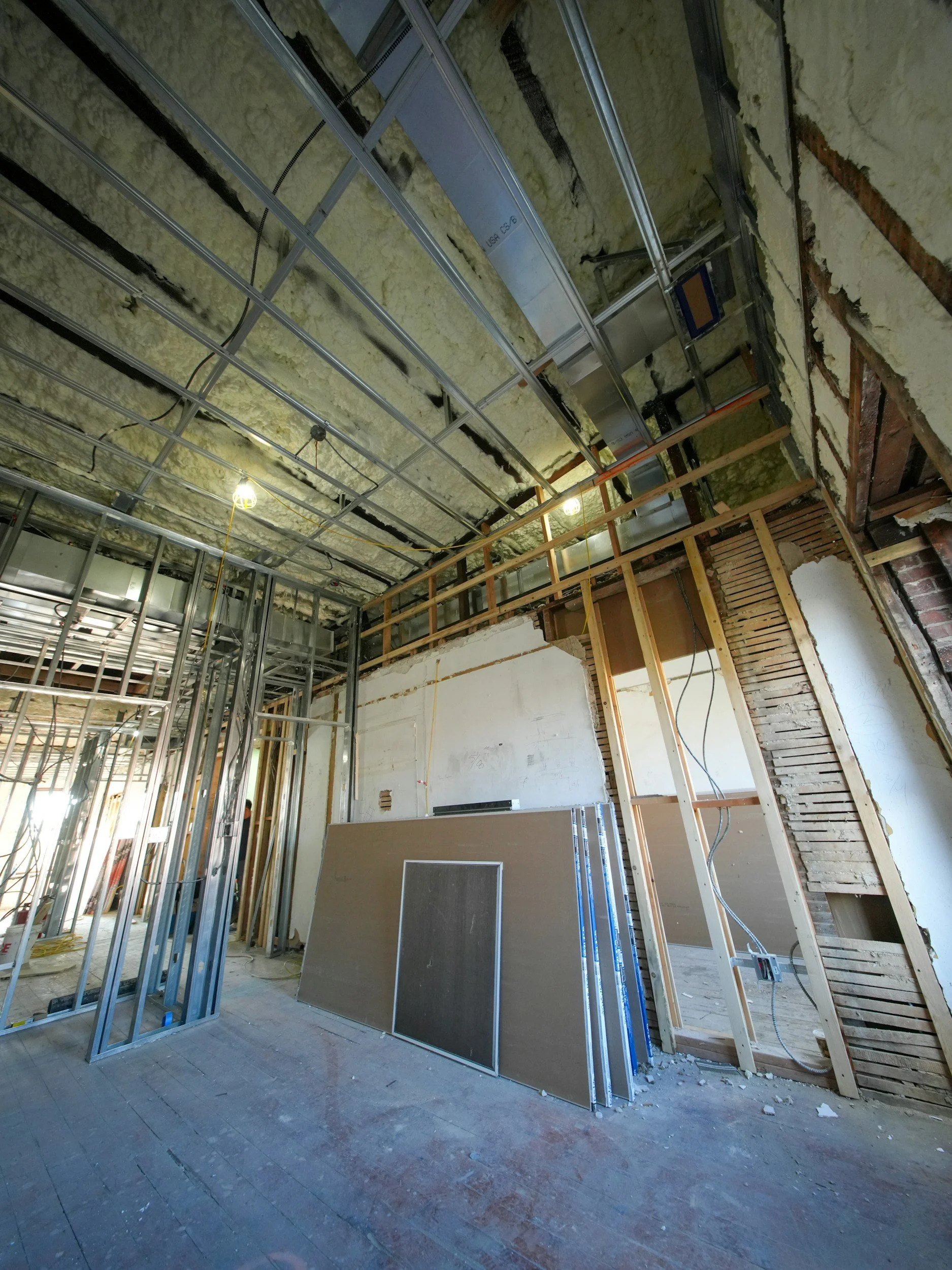
Liquid foam is sprayed into place, expanding to fill gaps. This is for specialist applications only, with full ventilation strategy and warranty. Not generally recommended for roof retrofits.
Pros: Airtight, fills awkward voids, improves thermal continuity.
Cons: Risky - can trap moisture, hard to remove, and some lenders/insurers refuse to insure properties with spray foam in roofs due to condensation problems.
Wood Fibre Insulation
A natural option growing in popularity. Semi-rigid boards made from compressed wood fibres are breathable, good for summer overheating (high thermal mass), and recyclable.
Pros: Low embodied energy, hygroscopic (manages moisture), excellent summer performance.
Cons: Thicker layers are required for the same U-value, which makes it heavier and usually more expensive than mineral wool.
Often chosen in timber frame builds where vapour control and sustainability are key.
Expanded Polystyrene (EPS) Insulation
Lightweight white or grey foam boards/beads.
Pros: Cheap, easy to cut, resistant to moisture, decent insulation performance.
Cons: Not breathable, flammable without treatment, made from fossil fuels.
Best for: Below concrete slabs, external wall insulation systems (EWI).
Extruded Polystyrene (XPS) Insulation
Denser and stronger than EPS, usually blue, green, or pink boards.
Pros: High compressive strength, water-resistant, ideal below ground or in inverted roofs.
Cons: Higher cost, higher embodied carbon.
Best for: Basement walls, below slabs, flat roof insulation.
Cork Insulation
Harvested from cork oak trees, sold as granules, boards, or blown insulation.
Pros: Renewable, carbon-negative while trees regrow, breathable, excellent acoustic and thermal properties, naturally pest-resistant.
Cons: Expensive; availability varies; thicker build-ups required than PIR/PUR.
Best for: Eco-builds, especially in walls, roofs, and as floor underlay for acoustic comfort.
Blown Cellulose Insulation
Made from recycled newspaper, treated for fire and pest resistance. Installed by specialist contractors who blow it into cavities or roof voids.
Pros: High recycled content fills gaps well, good acoustic properties.
Cons: Requires professional installation, can settle over time if not packed correctly.
Expanded Clay Aggregate (LECA) Insulation
Small, lightweight clay pellets expand at high temperatures. Often used below floors, roof gardens, or to insulate hard-to-reach voids.
Pros: Lightweight yet strong, insulating, and moisture-resistant, often used as a filler.
Cons: Lower thermal performance compared to boards or batts; bulky to transport.
Best for: Below floors, roof gardens, or to insulate hard-to-reach voids.
Foam Glass (Glass Gravel / Glass Foam Boards) Insulation
Made from recycled glass, expanded into a lightweight foamed material. This is good for floor slabs, basements, and flat roofs.
Pros: Non-combustible, water-resistant, high compressive strength, good eco-credentials when recycled.
Cons: Higher cost, niche supply.
Still got lots of questions? Making decisions for self-build homes or large-scale renovations can be overwhelming, so we always recommend speaking to an expert, like us at Mayflower Mortgage. Book in for a FREE call with our experts today and we can help you to answer your questions and talk through what your project could look like.