

Planning your exit from a Bridging Loan into a Self-Build Mortgage
A bridging loan is only ever half the plan. The other half (which is arguably more important) is the point at which the short-term facility is repaid, and you move on to the longer-term finance suited to the project you are running.
Lenders call this kind of planned refinance your exit strategy, and how well you’ve planned for it has a direct effect on whether your bridging application gets approved in the first place, and whether the refinance happens smoothly when the time comes.
Why does your exit strategy matter before you have even drawn the bridging loan?
Every application is assessed as much on how it will be repaid as on the security behind it. Bridging lenders are comfortable taking on short-term risk precisely because the loan is, by design, temporary. That comfort depends entirely on the lender's belief that your stated exit route is realistic. Meaning if the exit plan is vague, unproven, or simply "I'll work something out," the application is far less likely to be approved at all, let alone at a competitive rate.
This means exit planning is not something you can leave until month nine of a twelve-month bridge. The strongest applications go in with the refinance route already mapped out, including which lender or type of facility you expect to move to, roughly when, and what needs to be true about the project at that point for the refinance to work.
What does refinancing from a bridge into development finance actually involve?
If your project is a development (multiple units, a larger conversion, or a scheme being built for sale or letting), the natural exit often comes once you have progressed beyond the early, high-uncertainty stage that the bridge covered. The typical sequence looks like this:
You use the bridging loan to secure the site, fund early-stage costs, or cover a gap (such as land without planning) that a development lender would not touch at that point.
You progress the scheme to the point a development lender needs to see: usually planning permission granted, a finalised build cost plan, and (for larger schemes) a contractor or build route confirmed.
You apply for the development finance facility, sized against the project's gross development value (GDV) and total cost. At Mayflower (at the time of writing), development finance options include Senior Debt up to 60% GDV, Stretch Senior at 70–75% GDV, Mezzanine Finance covering 85-90% of total project cost, and Equity Finance up to 95-100%. Giving a spread of structures depending on how much of the cost you want to fund against value versus cost.
The development facility drawn down at completion of this refinance is used to repay the bridging loan in full, and from that point the project is funded through staged drawdowns against build progress rather than the original short-term facility.
Because Mayflower is a NACFB member with access across a panel of development lenders, this kind of refinance can be planned in tandem with the original bridging application. Meaning the lender you eventually move to is not a surprise decided under time pressure, but part of the strategy from the outset.
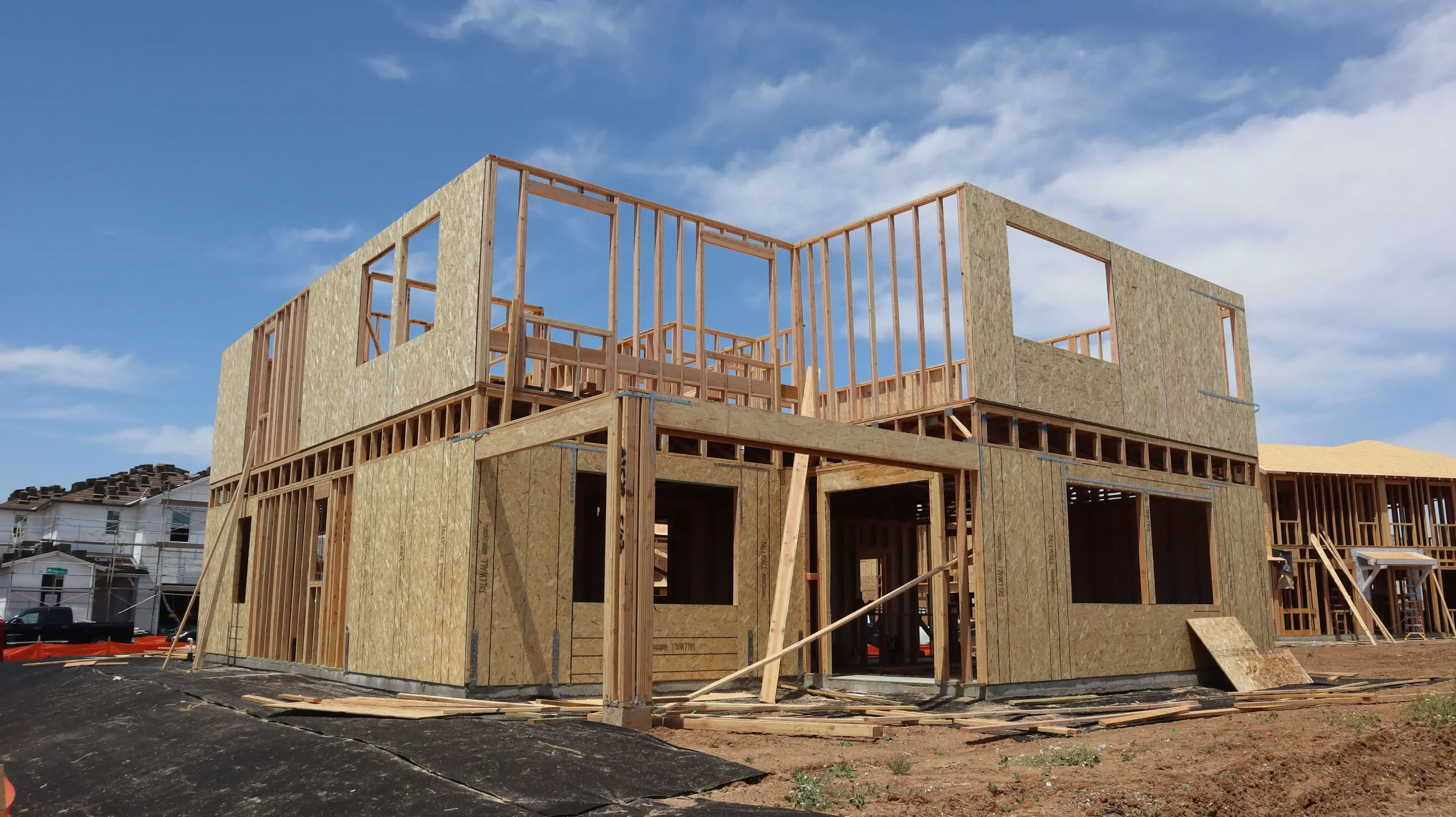
What does refinancing from a bridge into a self-build mortgage involve?
For an individual self-build project (where you’re building your own home rather than a development for sale), the exit is usually a self-build mortgage rather than a commercial development facility. This route typically applies when a bridge has been used to:
Secure a plot at auction or through a fast private sale before planning permission was in place.
Cover a short funding gap between selling your current home and the self-build mortgage formally starting.
Fund early site costs (like demolition, site clearance, or access works) ahead of a structured staged-drawdown facility taking over.
Once the project reaches the point where it can be properly assessed, which is generally once planning permission is granted and you have a defined build specification and cost plan, you refinance into a self-build mortgage. At Mayflower, this can lend up to 75% of the total project cost, with funds released via staged drawdowns as the build progresses, rather than as a single advance. The bridging loan is repaid in full from the refinance, and the project moves on to financing structured around your build programme.
What do lenders need to see to be confident your exit will actually work?
Whether you are exiting into development finance or a self-build mortgage, the receiving lender and the bridging lender assessing you up front will be looking for broadly the same things:
A realistic valuation or GDV. Whether it is the projected value of a finished development or the eventual value of your self-build home, the numbers need to be supported by genuine comparable evidence, not optimistic assumptions.
Planning status that matches the stage you say you are at. A refinance application that claims planning is "imminent" when it has not even been submitted will not get far. Lenders want documented evidence, like a decision notice, or, at minimum, a live application with a determination date.
A costed, deliverable build plan. A detailed cost plan, ideally with quotes or a contractor agreement attached, gives the lender confidence the project can actually be completed within budget.
Evidence you can service the new facility. Affordability assessment does not disappear just because you are refinancing. The new lender will stress-test the facility against your income, or against the development's projected sales/rental income, as relevant to the product.
A track record or team that supports delivery. For development finance especially, lenders want to see relevant experience (yours or your contractor's) or a credible plan for managing that risk if this is a first project.
A buffer between the bridge's term end and the refinance completing. Lenders are wary of exit plans with no slack. If the refinance is timed to complete the same week the bridge matures, any delay on either side creates a problem.
How can you plan the exit to improve approval chances and reduce cost?
Start the refinance conversation early, ideally before you even draw the bridging loan. Knowing in principle what a development or self-build lender will want to see at exit lets you shape the bridging term and the project itself to hit those markers.
Use a broker who can see both sides of the transaction. Arranging the bridge and the term refinance through the same firm means the exit strategy is built into the bridging application from day one, rather than treated as two unconnected deals.
Build in more time than you think you need. Planning decisions, build programmes, and lender processing all tend to run longer than the optimistic case. A bridging term with genuine slack avoids a costly extension or a forced, badly-timed exit.
Keep your paperwork moving in parallel, not in sequence. Progressing planning, finalising your build cost plan, and having preliminary conversations with the refinance lender simultaneously, rather than one after another, compresses the overall timeline.
Revisit your exit plan if circumstances change. If costs rise, planning is delayed, or the property market shifts, update your lender rather than hoping the original plan still holds. A lender kept informed is far more likely to work with you on a solution than one blindsided near the end of the term.
What are the common mistakes to avoid?
Treating the bridge and the exit as separate problems. The two need to be planned together. The bridging term, the project programme, and the refinance application should all be built around the same realistic timeline.
Assuming planning will be granted on the first attempt and on schedule. Building no contingency into the bridging term for a delayed decision or a resubmission is one of the most common causes of bridging loans running into expensive extensions.
Leaving the refinance application until the bridge is close to maturing. Starting the development finance or self-build mortgage application with only weeks left on the bridge leaves no room for the lender's own processing time, let alone any hiccups.
Underestimating the build cost plan. A refinance lender will stress-test the numbers; an unrealistic or thin cost plan can derail the exit even if everything else about the project is sound.
Not having a fallback. Relying entirely on a single planned exit route, with no plan B if the refinance lender declines or the timeline slips, leaves you exposed if anything does not go exactly as expected.
Planning a bridge with a development or self-build exit in mind?
The strongest bridging-to-term strategies are planned end-to-end from the start. Mayflower Mortgage arranges bridging loans alongside development finance and self-build mortgages, as a NACFB member broker working across a panel of specialist lenders on both sides of the transaction. Book a free call, and we can help you understand your financing options and map out your exit.
Your home may be repossessed if you do not keep up repayments on your mortgage.
Mayflower Mortgage & Finance LTD is authorised and regulated by the Financial Conduct Authority under the firm reference number of 944601.