

How to find the perfect plot for your Self-Build.
Finding land for a Self-Build can feel impossible. So here at Mayflower Mortgage, we’re here to help you cut through the noise, covering where to look and what to look for. Let’s get into it.
Starting with plot viability
When we say a plot is ‘viable’, we’re really talking about the big questions, like is a home likely to be approved on this land? Can you actually build here? Is there safe access, realistic services, and sensible foundations? Will the finished value cover the land and build costs with a healthy margin?
Every site sits somewhere on a spectrum: at one end, non-starters: protected land with no access, or a plot that fails basic safety or environmental tests. At the other end, straightforward plots: sites with complete planning, road access, and services already in place. Most opportunities are in the middle and can be workable if approached correctly.
Your goal is to learn quick triage. Before you spend money on surveys, you want to place a plot on that spectrum with reasonable confidence so you’re good to move forward. But that’s something we can help you with.
Where to look for a plot for a Self-Build?
So, where do plots actually appear? And where do you look for a plot? Short answer is everywhere.
At Mayflower, we offer a FREE plot finder tool where you can sign up to get all new plots that come available within a 30 mile radius of your dream location, sent directly to your inbox each month. Naturally, we think this is the best approach, and you can check the link in the description to sign up. But if you want to do it the old fashion way, then we suggest a multi-channel approach for you to cover all bases.This includes:
Estate & land agents: Visit offices in person. Explain you’re a serious buyer, share your brief, and ask to be called when something suitable lands on a desk.
Specialist plot websites: Plotfinder, Rightmove’s land section, and Zoopla are useful for scanning the market. Competition is fierce, so set up saved searches and daily alerts.
Auctions: Auctions can offer value, but you must do all due diligence before bidding: planning history, legal pack, and any surveys you need. If you win, you’re committed, so try to do any checks you can in advance.
Local authorities: Check ‘Right to Build’ registers and brownfield registers. They’re not perfect, but they can highlight overlooked opportunities or emerging plans.
Networking & word-of-mouth: Ask locally. Farmers sometimes sell corners of fields; families release garden plots; small developers offload surplus parcels. Local groups, parish boards, we’ve even had a client who started their self build journey by chatting to someone in their local pub.
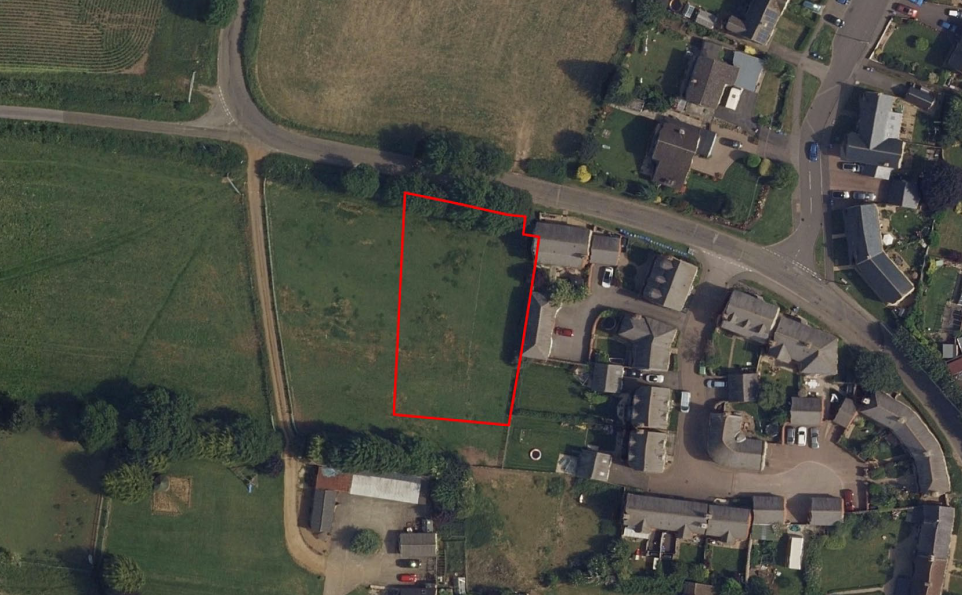
How much does land cost?
This depends mostly on location and planning status. A plot with outline or full planning in a sought-after area can be many times the price of unconsented land in remote locations.
You may’ve heard the term ‘marriage value’ effect, which references to how planning permission transforms value. That’s why some people buy without planning and apply. The potential uplift can be significant, but so are the risks.
Buying unconsented land will involve a lot of speculation, which often doesn’t pay off. So if you are going down this route, use what public information you have available to make more informed decisions. You can check local plans to see if the land inside a settlement boundary is allocated. View other local applications to see if similar approvals have happened nearby in recent years. And note any designations, such as Green Belt or flood zone areas.
You’ll then need to apply for planning permission yourself.
Outline permission agrees the principle of a home, with details to be provided later in Reserved Matters. Full planning is detailed consent, meaning you’re ready to build.
A typical journey will start with optional pre-application advice with the council; then your architect prepares drawings and statements; you submit; there’s neighbour and consultee consultation; the case officer writes a report; you receive a decision; and if approved, you’ll likely have conditions to discharge before starting.
Timelines vary, and they can extend if the council is busy or if reports are needed. Most lenders will want full planning before releasing main funds, so timing finance and planning together is essential.
Whether your land has full planning already or not, A helpful sense-check is the Rule of Thirds. As a rough guide, successful projects often balance to roughly one-third land, one-third build, and one-third equity or profit. It’s not universal, but if your numbers are wildly off that shape, pause and re-check. Or ask a professional.
And don’t forget the hidden extras: access improvements, utility connections, demolition, planning contributions, professional fees, and contingency. Always work backwards from the finished value in that area to set a sensible land ceiling.
How do you begin to value the end result of your Self-Build?
To set a sensible land price ceiling, start with GDV, which is the Gross Development Value of your finished home. Use sold comparables nearby, not just listings. And adjust cautiously for differences like size, spec and views.
Then:
Gross Development Value - (minus) build costs - (minus) professional fees and contingency = (equals) your maximum land spend.
If land prices break that ceiling, you need to review the profitability of your plans.
Plot problems to consider
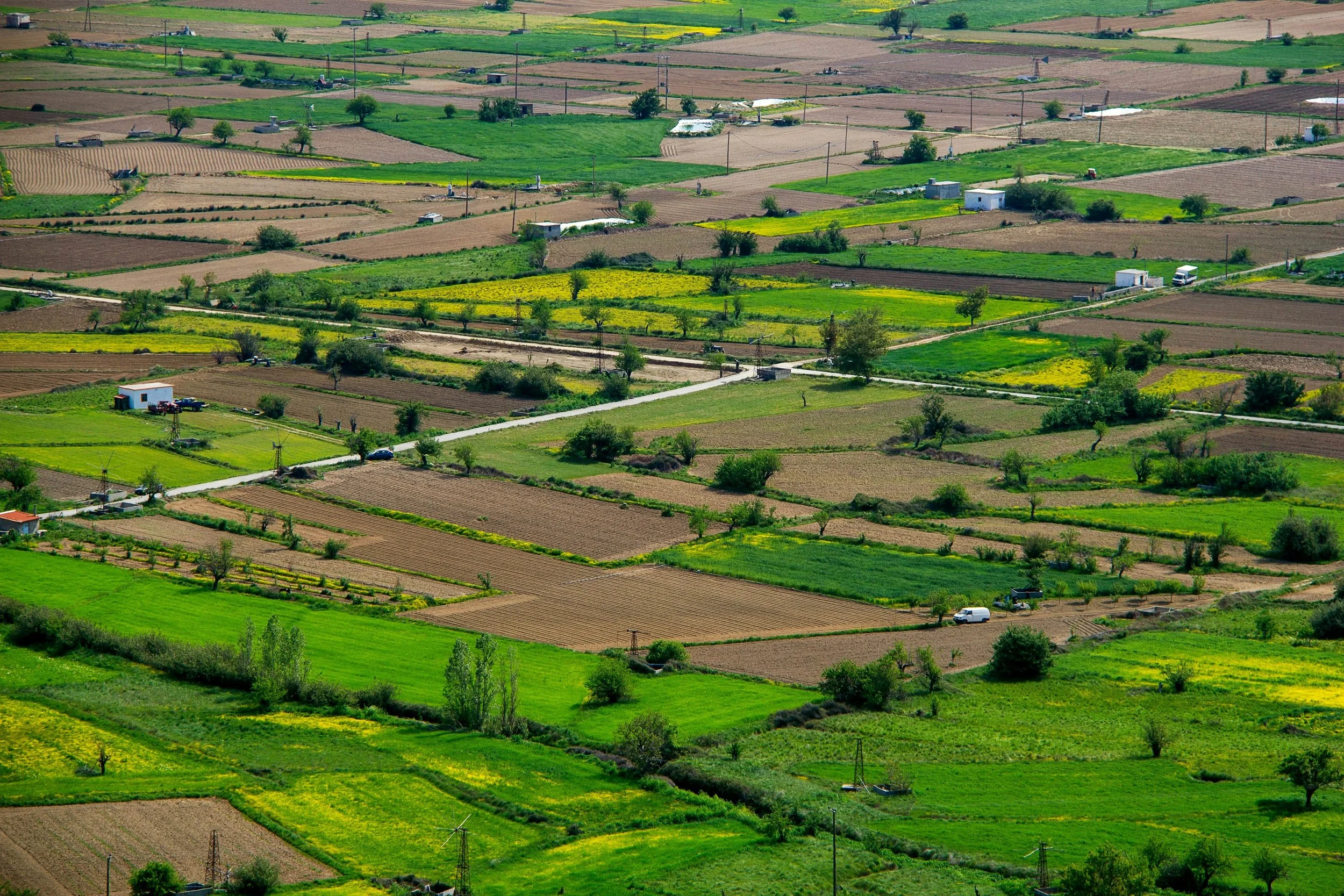
Many plots on the open market have a thorn or two. And thorns cost money. There are many things to consider, such as utilities, soil quality, protected trees, plot locations, and the local neighbourhood.
Utilities:
Ask suppliers early for connection quotes; costs of £10–30k aren’t unusual, so budget accordingly. And lenders will usually require a soil survey to verify ground strength and contamination.
Legally, your solicitor should check your plot has a:
Clear title
Boundary definition
Access rights
Covenants or overage clauses
Easements for utilities
Protected trees
These can limit where you build, as roots need protecting. If a tree or group of trees on or adjacent to your plot has a Tree Preservation Order, or a TPO, it means you cannot cut, uproot, or damage it without explicit consent from the local planning authority.
Similarly, some areas are protected. Even without a formal TPO, if the land is in a conservation area, trees are often automatically protected. They will again require notification of any work you want to carry out.
Always ask about this when you’re on a site visit, or check the LPA tree register. If trees constrain your plot, factor in additional costs accordingly, as you may need piled foundations, specialist soil protection boars, or diverted services.
Flood risk
In England, the Environment Agency classifies land into Flood Zones 1, 2, 3 and 3b for planning purposes. Zone 1 is the lowest risk, and Zones 2 and 3 are higher. You should check the “Flood Map for Planning” service and your local strategic flood risk assessment (called SFRA) early on. Suppose you’re looking at plots with a higher flood risk. In that case, you may be required to include a sustainable drainage system strategy, attenuation tanks, raised finished floor levels, or avoid basements altogether. And insurance costs can be higher or unavailable, especially when lenders are more cautious if the area looks like it may become a higher flood risk in the future.
Distance to connections
You might find a beautiful plot, but if it’s miles from the mains utilities, that is something that needs to be planned for accordingly.
We recommend you check:
Distance to nearest mains water, sewer, electricity poles, and gas
If the land is close to existing infrastructure or if long trenches will be required across fiels or roads.
If the local electrical network is capable of supplying the size and spec of the home you plan
What the broadband availability is like
Depending on how remote your plot is, service connections can cost an additional £10,000 to £25,000 pounds. But you can get more accurate estimates by ringing up your local water company or broadband provider to ask them directly for any information you need.
Your plot neighbourhood
Your plot location might feel perfect now, but what about in the next 5, 10 , 20 years?
You may have open fields adjacent to your plot, but are they earmarked for housing allocation? Or are there any major infrastructure plans nearby that could bring noise or traffic to your area?
Think about any social infrastructure you’ll need or want, either now or in the future. Like schools, shops, healthcare or public transport.
And try to visit the neighbourhood at different times of day and days of the week if it’s somewhere new. This can impact your quality of life whilst you’re there, and the resale appeal when or if you want to sell further down the line.
So what to keep in mind when you go looking for a Self-Build plot?
1) Access & highways safety.
Is there a safe, legal way to drive onto the plot? If access crosses third-party land, do you have rights in the title?
2) Orientation & topography.
Flat plots are usually cheaper to build. Slopes can be beautiful but often mean retaining walls, deeper foundations, or split-level designs. South-facing helps passive solar, but consider summer overheating and shading.
3) Surroundings & amenity:
Would you enjoy living here long-term? Listen for road noise, kennels, pubs, farm machinery. Look for nearby developments approved or proposed.
4) Services proximity.
How far to mains water, electricity, and sewer? If no sewer, private drainage is possible, but rules are strict and you’ll need compliant designs and space.
5) Ground conditions.
What’s underfoot? Clay, peat, high water tables, made ground all change foundation design and cost.
6) Planning context.
Is this inside a settlement boundary? What has been approved nearby recently? Has this very site been refused before and why? And if you’re struggling to find the one, remember that you could also look for a replacement dwelling instead.
A replacement dwelling is when you buy an existing house, often old or run-down, and apply to demolish it and build a new home in its place. This works well becuase there’s already a lawful residential use on the site. Planning authorities tend to accept ‘one home out, one home in’ in locations where brand-new homes are otherwise restricted. Additional advantages include that services are often already in place, access is established, and neighbours understand the site’s use. However, be sure to consider the following downsides: demolition costs, potential asbestos, design limitations in conservation areas, and the potential for the replacement to be larger under local policy.
So if you’re looking to start your self-build journey by finding a plot, good luck! Don’t forget to sign up for our plot prospector tool to get personalised notifications sent directly to you, and our team are always here to answer any questions you may have.