

Can I get a renovation mortgage for an uninhabitable property?
So you've found a property with real potential. Maybe a probate sale, a long-empty house, or somewhere that's been gutted mid-renovation by a previous owner who ran out of money. The price reflects its condition, but there's just one problem: it doesn't have a working kitchen, or a bathroom, or both, and every mainstream lender you speak to says the same thing. Declined. Not eligible. Try again once it's habitable.
That response isn't a quirk of one lender's underwriting; it's a structural feature of how standard residential mortgages work. They're built to lend against a property that's already a home, not one that needs to become one. Understanding exactly where that “mortgageability” line sits and how a renovation mortgage is structured to fund the gap is key to financing this kind of purchase properly, rather than relying on cash, family loans, or losing the property to a cash buyer.
Why won't a standard mortgage touch an uninhabitable property?
Most mortgage lenders expect a property to have both a functioning kitchen and a functioning bathroom before they'll consider it habitable, along with the more basic essentials: a watertight roof, working plumbing, electrical systems that meet safety standards, and heating. Lenders also generally expect the property to be secure, weatherproof and self-contained.
At application stage, the lender instructs a surveyor to physically inspect the property, and it's that surveyor's report, not the estate agent's listing or your own assessment, that determines whether the property is treated as habitable. If the surveyor flags missing kitchen or bathroom facilities, no running water, or significant disrepair, the case is typically referred back with one of two outcomes: an outright decline, or an offer subject to retention, where the lender holds back part of the mortgage until specified repair works are completed and re-inspected.
Retentions sound like a solution, but they create an obvious chicken-and-egg problem: you need the money to do the works, but the lender won't release the money until the works are done. For a property with no kitchen or bathroom at all, that gap is usually too large for a retention mortgage to bridge sensibly, which is where most standard high street applications stall.
What actually makes a property “unmortgageable”?
Beyond the missing kitchen or bathroom that's the focus of this guide, the same mortgageability threshold is commonly triggered by:
No safe or legal access to one or more rooms
Significant structural issues, like subsidence, roof failure, or unsafe floors
No working electrics, gas safety certificate, or heating system
Japanese knotweed, severe damp, or visible signs of significant disrepair
A property that's only part-converted or part-demolished from previous works
The common thread is risk to the lender's security. A standard mortgage is secured against the property's current value as a place someone could live in tomorrow. If a surveyor can't confirm that, the lender has no reliable security to lend against, regardless of how good the post-renovation value might look on paper.
How a renovation mortgage solves the mortgageability problem
A renovation mortgage is built around a completely different question. Instead of asking “Is this habitable today?”, it asks, “What will this be worth once the works are finished, and can we fund those works safely in stages?” That reframing is what makes uninhabitable properties financeable at all.
Mayflower's renovation mortgages lend up to 90% LTGDV (loan-to-gross development value), against a minimum 10% cash deposit, with funds released in stages as work progresses rather than as a single sum on completion. As an example, you could be planning to take a property from a £350,000 purchase and starting value through to a £775,000 end value, and that uplift will only be achievable because the lending is assessed against the finished property value rather than the current value.
The structure works like this:
Initial drawdown at purchase. Funds are released to complete the purchase, typically against the property's current (often heavily discounted) value.
Staged drawdowns as work completes. Further funds are released at agreed milestones (first fix, second fix, completion of kitchen and bathroom installation, and so on), usually confirmed by a valuer or surveyor sign-off at each stage rather than all at once.
Final drawdown and revaluation. Once the property is fully habitable and finished to specification, a final valuation confirms the uplift in value, and the mortgage can convert to its end structure.
Because the lender is releasing money in instalments tied to verified progress, rather than handing over the full mortgage against a property it can't yet classify as habitable, the risk is managed throughout rather than concentrated at day one. That's the structural difference that allows a property with no kitchen or bathroom to be financed at all.
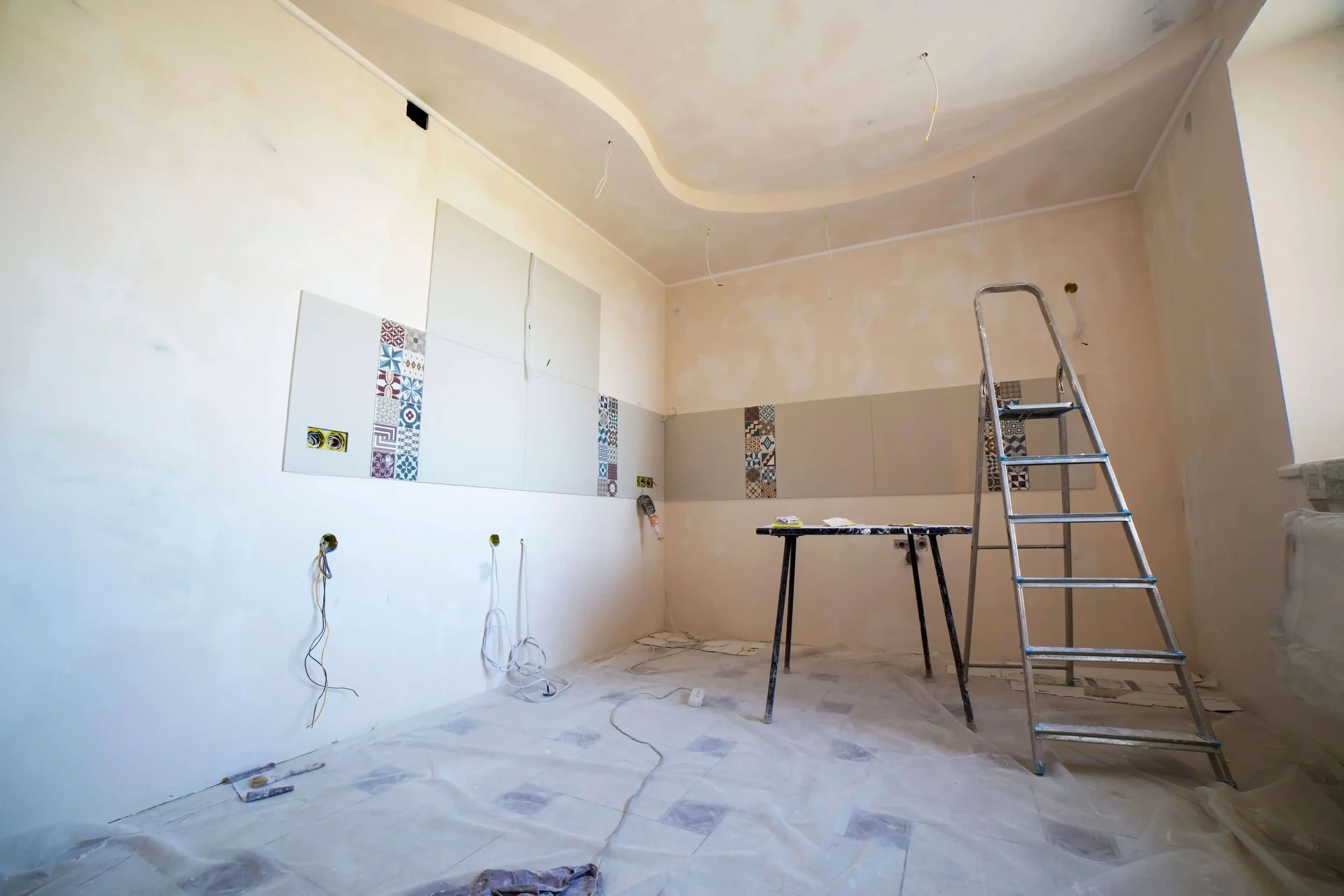
What lenders want to see before they'll fund a gutted property:
A realistic schedule of works.
This needs to be broken down by trade and stage, and ideally costed by a contractor rather than estimated by the buyer. A vague scope of works is one of the fastest ways to slow down or derail an application.
A credible projected GDV.
Lenders will want to see the projected end value supported by comparable sales of finished properties nearby, not the buyer's optimism about what the area might do. The GDV is what the loan is sized against, so it needs to be defensible.
Evidence the buyer can manage the project.
This doesn't mean you have to do it yourself, but the lender needs confidence the work will actually get done. A contractor or project manager with a track record on similar-scale projects goes a long way toward satisfying this.
A sensible contingency.
Uninhabitable properties often have hidden issues behind walls, floors and ceilings that only surface once work starts. Your contingency needs to be sized to reflect that reality, not just the optimistic version of the build.
Planning and building regulations clarity.
Where the works involve structural changes, extensions, or a change of use, the lender will want to know that consent is already in hand, or that there's a realistic, documented route to getting it.
How to improve your approval chances on a gutted or unfinished property?
Commission a RICS Level 3 Building Survey before you commit.
This is the most detailed survey available and is specifically designed for older properties in poor condition or complex renovation projects. It tells you not just what's wrong, but how serious it is and what it will cost to fix, which feeds directly into your schedule of works and costings.
Get itemised, written contractor quotes rather than verbal estimates.
Lenders and valuers need a believable schedule of works with real numbers attached, broken down by stage. A rough ballpark from a builder over the phone won't carry weight in an application.
Be upfront about the property's current state from the first conversation.
Surveyors will find missing kitchens and bathrooms regardless of what's disclosed. Starting the lender conversation with the real picture avoids wasted time pursuing a product that was never going to fit.
Build in contingency for the unknown.
A property that's been stripped out or left empty for years tends to reveal problems, like damp, wiring, and drainage, only once work begins. Price for that risk rather than the best-case version of the build.
Work with a broker who regularly places specialist renovation cases.
Not every lender assesses a fully gutted property the same way, and matching your project to the right one makes a material difference to both approval odds and the cost of borrowing.
Common mistakes to avoid
Applying for a standard residential mortgage first and only exploring specialist finance after a decline.
This costs time (sometimes the property itself if a cash buyer is waiting in the wings) and can leave a string of failed credit searches on your file. A specialist broker will tell you upfront which product type fits the property, before any applications are submitted.
Assuming a retention mortgage will cover a fully gutted property.
Retentions are designed for relatively minor, well-defined snagging items, not for funding the installation of an entire kitchen or bathroom from scratch. If the property can't be mortgaged at all in its current state, a retention on a standard product isn't the answer.
Underestimating how "habitable" is defined.
Buyers often assume that a property with a kitchen sink and a working toilet is habitable. Lenders and surveyors apply a stricter, more holistic standard that covers structural safety, weatherproofing and basic services together, and a property that feels liveable to you may not pass that test.
Skipping a proper survey to save money upfront.
A basic valuation won't surface the issues a RICS Level 3 survey will. Those hidden problems (like subsidence, damp, failed drainage) are exactly what derail renovation budgets later, so cutting the survey cost is a false economy.
Treating the schedule of works as a one-off document.
As work progresses on an uninhabitable property, the scope often needs to be revised. Keep your lender updated rather than letting drawdown stages fall out of step with what's actually happening on site.
Looking to get a renovation mortgage on an uninhabitable property?
If you've found a property with full potential but currently has no kitchen, no bathroom, or both, it's worth talking to a specialist before walking away. Book a free call with Mayflower Mortgage to see how arenovation mortgage could fund the project in stages, from purchase through to a finished, habitable home.
Your home may be repossessed if you do not keep up repayments on your mortgage.
Mayflower Mortgage & Finance LTD is authorised and regulated by the Financial Conduct Authority under the firm reference number of 944601.